Master English Grammar Rules for SSC & Bank Exams 2026
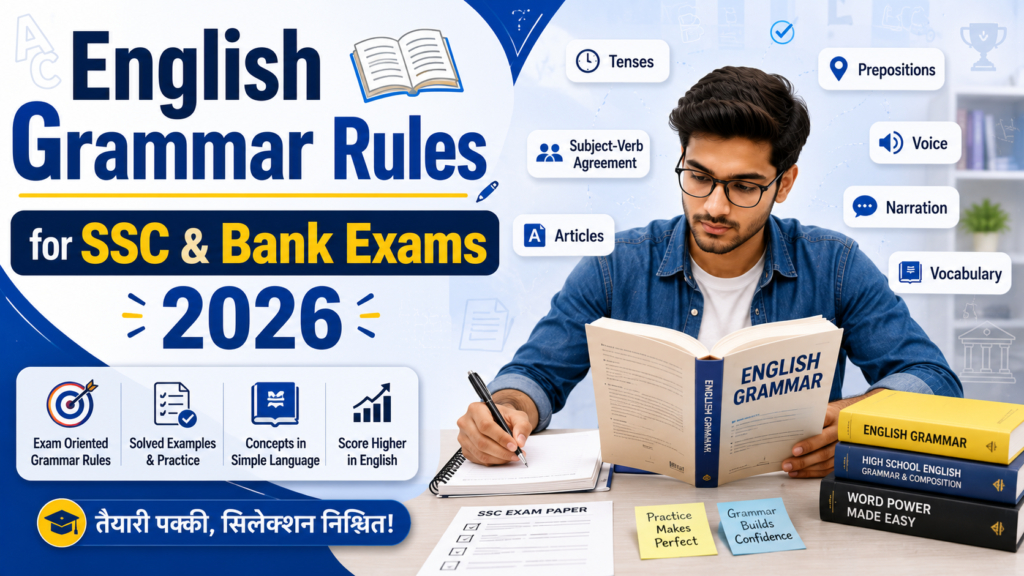
English Grammar Rules for Competitive Exams: Most Important Topics for SSC & Bank
राम-राम भाइयो और बहनों! कैसे हो सब? उम्मीद है सब बढ़िया होंगे और अपनी Sarkari Naukri की तैयारी में लगे होंगे। मैं भी तुम्हारी तरह ही UP/Bihar से हूँ और मैंने भी ये competitive exams दिए हैं, इसलिए जानता हूँ कि इंग्लिश कितनी तगड़ी पड़ जाती है।
खासकर जब बात आती है SSC और Bank exams की, तो English Grammar Rules एकदम Achilles’ heel बन जाते हैं कई स्टूडेंट्स के लिए। आज मैं तुम्हें वही सब बताऊंगा जो तुम्हें इंग्लिश ग्रामर में expert बना देगा और तुम confidently अपने exams crack कर पाओगे।
क्यों है English Grammar इतनी इम्पोर्टेन्ट?
जब भी हम SSC CGL, CHSL, Steno, या Bank PO/Clerk जैसे exams की बात करते हैं, तो English Section में Error Detection, Sentence Improvement, Fill in the Blanks, Passage Comprehension और Cloze Test जैसे सवाल आते हैं। इन सब के पीछे इंग्लिश ग्रामर का solid foundation होना बहुत ज़रूरी है।
यह सिर्फ पास होने की बात नहीं है, बल्कि अच्छे मार्क्स स्कोर करने की बात है, जिससे तुम Cut-off क्लियर कर सको। चलो, बिना टाइम बर्बाद किए सीधा उन Most Important Topics पर आते हैं जो तुम्हें रट लेने हैं.
Most Important English Grammar Rules for Competitive Exams
देखो, मैं तुम्हें सिर्फ random topics नहीं बताऊंगा। मैं वो topics बताऊंगा जिन पर SSC और Bank हर साल सवाल पूछते हैं, और जिनसे तुम कम एफर्ट में ज़्यादा मार्क्स स्कोर कर सकते हो।
1. Tenses (काल) – समय का खेल
Tenses तो इंग्लिश का foundation है। Present, Past और Future Tenses के सारे forms और उनका सही इस्तेमाल तुम्हें अच्छे से आना चाहिए। अक्सर Students Simple Past और Present Perfect, या Present Perfect Continuous और Past Perfect Continuous में गलतियां करते हैं।
- Simple Present Tense: Daily habits, universal truths. (e.g., The Sun rises in the East.)
- Present Continuous Tense: Actions happening now. (e.g., She is reading a book.)
- Present Perfect Tense: Actions completed in the recent past, often with ‘yet’, ‘already’, ‘just’. (e.g., I have already finished my work.)
- Present Perfect Continuous Tense: Actions started in the past and still continuing. (e.g., He has been studying for three hours.)
- Past Tense के rules: Simple Past और Past Perfect का इस्तेमाल कब और कैसे करना है, ये बहुत ज़रूरी है। ‘Before’ और ‘After’ के साथ इनका combination देखो।
2. Subject-Verb Agreement (तालमेल बिठाना)
यह सबसे ज़्यादा कॉमन गलती वाला टॉपिक है और सबसे ज़्यादा सवाल इसी से आते हैं। Subject सिंगुलर है तो Verb सिंगुलर होगा, अगर सब्जेक्ट प्लूरल है तो Verb भी प्लूरल होगा। बस यही basic रूल है, लेकिन इसकी बारीकियां बहुत हैं।
- “Either…or”, “Neither…nor”, “Not only…but also” के साथ Verb किसके अकॉर्डिंग लगता है? (Closest Subject)
- “As well as”, “Along with”, “Together with” के साथ Verb पहले सब्जेक्ट के अकॉर्डिंग लगता है।
- “Each”, “Every”, “One of”, “None of” के साथ हमेशा सिंगुलर Verb आता है।
- Collective Nouns (Team, Committee, Jury) के साथ कब सिंगुलर और कब प्लूरल Verb लगेगा, यह भी देखना है।
3. Prepositions (संबंधबोधक) – छोटी मगर मोटी बात
भले ही ये छोटे-छोटे शब्द लगते हैं, लेकिन इनका गलत इस्तेमाल पूरे Sentence का मतलब बदल देता है। ‘In’, ‘On’, ‘At’, ‘To’, ‘For’, ‘With’, ‘By’, ‘Of’ इन सबका सही उपयोग आना बहुत ज़रूरी है।
- Fixed Prepositions: कुछ वर्ड्स के साथ कुछ Prepositions fix होते हैं (e.g., ‘agree with someone’, ‘agree to a proposal’, ‘fond of’, ‘afraid of’). इनकी एक लिस्ट बना लो और याद कर लो।
- Time और Place के लिए ‘in’, ‘on’, ‘at’ का सही इस्तेमाल।
4. Conjunctions (संयोजक) – जोड़ने वाले शब्द
Conjunctions दो शब्दों, phrases या clauses को जोड़ते हैं। “And”, “But”, “Or”, “Nor”, “So”, “Yet”, “For” (FANBOYS) सबसे कॉमन हैं। Correlative Conjunctions जैसे “Either…or”, “Neither…nor”, “Both…and”, “Not only…but also” पर खास ध्यान देना।
- इनका इस्तेमाल करते वक्त Parallelism का ध्यान रखना। मतलब अगर एक हिस्सा Noun है तो दूसरा भी Noun ही हो।
- Subordinating Conjunctions (जैसे ‘although’, ‘because’, ‘while’, ‘since’) का भी सही इस्तेमाल पता होना चाहिए।
5. Articles (A, An, The) – छोटा पैकेट, बड़ा धमाका
Determiners का हिस्सा Articles बहुत basic लगते हैं पर इन्हीं में अक्सर गलतियां होती हैं। Definite Article ‘The’ और Indefinite Articles ‘A/An’ के रूल्स।
- Proper Nouns, Abstract Nouns, Material Nouns के साथ Articles कब लगते हैं और कब नहीं।
- Omission of Articles (जहां Article नहीं लगता) भी उतना ही ज़रूरी है।
6. Adjectives & Adverbs (विशेषण और क्रियाविशेषण) – क्वालिटी और तरीका
ये वर्ड्स Sentences में जान डाल देते हैं, और इनके सही इस्तेमाल से Sentence की meaning और structure दोनों सही रहती है।
- Adjectives: Nouns या Pronouns को describe करते हैं (e.g., beautiful, tall). Degrees of Comparison (positive, comparative, superlative) बहुत इम्पोर्टेन्ट हैं।
- Adverbs: Verbs, Adjectives या दूसरे Adverbs को describe करते हैं (e.g., carefully, quickly, very). इनके भी types और position का ध्यान रखें।
- खासकर words जैसे ‘hard’ vs ‘hardly’, ‘fast’ vs ‘fastly’ (जो गलत है), ‘good’ vs ‘well’ में अंतर समझना।
7. Nouns and Pronouns (संज्ञा और सर्वनाम) – नाम और नाम की जगह
इनके basic rules तो सबको पता होते हैं, लेकिन इनके advanced concepts पर सवाल आते हैं।
- Nouns: Singular/Plural forms, Collective Nouns, Countable/Uncountable Nouns, Possessive Nouns.
- Pronouns: Subjective/Objective cases (I/me, he/him), Possessive Pronouns (mine, yours), Reflexive Pronouns (myself, himself), Relative Pronouns (who, which, that).
- Pronoun Antecedent Agreement: Pronoun हमेशा उस Noun से agree करना चाहिए जिसे वह refer कर रहा है (gender, number)।
8. Voice (Active and Passive) – तरीका बदलने का
Direct/Indirect Speech और Active/Passive Voice से अक्सर सीधे-सीधे सवाल आते हैं, खासकर SSC में। इनके Transformation Rules एकदम रट लो.
- Active Voice में Subject action करता है (e.g., I write a letter).
- Passive Voice में Subject action receive करता है (e.g., A letter is written by me).
- Tenses के according helping verbs कैसे बदलते हैं ये अच्छे से समझो।
9. Narration (Direct and Indirect Speech) – बात कहने का अंदाज़
यह भी transformation का एक ज़रूरी हिस्सा है। Direct Speech को Indirect में बदलते वक्त Tenses, Pronouns और Time/Place expressions कैसे बदलते हैं, यह जानना बहुत ज़रूरी है।
- Reporting Verb के Tense के हिसाब से Reported Speech का Tense कैसे बदलता है?
- Interrogative, Imperative, Exclamatory Sentences को Indirect में कैसे बदलते हैं?
Sarkari Naukri के लिए English Grammar की तैयारी कैसे करें?
सिर्फ topics जान लेना काफी नहीं है, भैया। तैयारी का सही तरीका भी पता होना चाहिए।
Basic Clear करो
पहले कोई अच्छी Grammar Book (जैसे Wren & Martin) से अपने सारे basic concepts क्लियर करो। शुरुआत में भले ही थोड़ा टाइम लगे, लेकिन यह foundation बहुत ज़रूरी है।
Practice, Practice & Practice
Rule याद करने से कुछ नहीं होगा, apply करना आना चाहिए। जितने ज़्यादा questions practice करोगे, उतना कॉन्फिडेंस बढ़ेगा। Error Detection और Sentence Improvement पर ज़्यादा ध्यान दो।
Previous Year Papers (PYPs)
यह ब्रह्मस्त्र है! SSC और Bank के Previous Year Papers उठाओ और उनमें जितने भी English Grammar के सवाल हैं, उन्हें सॉल्व करो। इससे तुम्हें Exam Pattern और सवाल पूछने का तरीका समझ आएगा। मेरी मानो, 5-7 साल के PYPs ज़रूर लगाना।
Mock Test दो
जब तैयारी हो जाए, तो Regular Mock Test दो। इससे तुम्हें अपनी स्पीड और Accuracy का पता चलेगा, और तुम टाइम मैनेजमेंट भी सीख पाओगे।
Revision मत भूलो
जो भी रूल्स पढ़े हैं, उन्हें regularly revise करते रहो। अपनी गलतियों को एक कॉपी में नोट करो और उन पर काम करो।
कुछ एडिशनल टिप्स
- Newspaper Reading: रोज़ English Newspaper (जैसे The Hindu या The Indian Express) पढ़ो। इससे तुम्हारी Vocab और Comprehension तो सुधरेगी ही, साथ ही तुम्हें sentences के correct structure और Grammar का प्रैक्टिकल यूज़ भी समझ आएगा।
- Make Short Notes: हर topic के main rules और exceptions के छोटे-छोटे notes बनाओ। ये Revision के टाइम बहुत हेल्पफुल होंगे।
- Don’t Mug Up, Understand! सिर्फ रटने से काम नहीं चलेगा। Grammar के rules को समझो कि कौन सा rule क्यों अप्लाई हो रहा है।
तो साथियों, Sarkari Naukri पाना कोई खेल नहीं है, और English Grammar उनमें से एक बड़ा hurdle है। लेकिन सही strategy और dedication से तुम इसे आसानी से पार कर जाओगे। ये English Grammar Rules for Competitive Exams: Most Important Topics for SSC & Bank जो मैंने बताए हैं, इन्हें अच्छे से कवर कर लो।
याद रखना, मेहनत करने वालों की कभी हार नहीं होती। अपनी तैयारी में लगे रहो और पॉजिटिव रहो। अगर कुछ और जानना हो, तो बेझिझक पूछना। All the best for your upcoming exams!
🔥 Ready to Apply? Live Govt Jobs Available Now:
Don't just read the guide—take action. Check out these top active recruitments.